
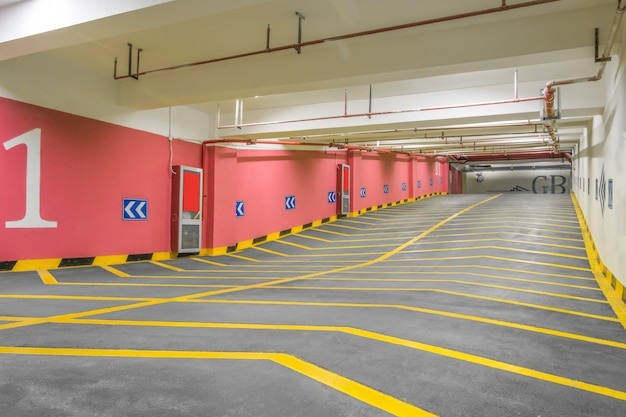
A well-marked parking lot is essential for safety, organization, and creating a professional appearance for any commercial property. Clear lines and visible markings help direct traffic, define parking spaces, and ensure compliance with accessibility standards. Parking lot striping is a structured process that requires planning, preparation, and precision to achieve long-lasting results. Below is a detailed step-by-step guide to help you understand how professional striping is completed.
Step 1: Initial Inspection and Planning
The first step in parking lot striping is a thorough inspection of the pavement. Contractors assess the current condition of the asphalt, checking for cracks, potholes, or surface damage. Striping should only be done on a stable and properly maintained surface to ensure durability.
During this phase, a layout plan is created. Professionals measure the lot carefully to determine the most efficient arrangement of parking spaces, traffic lanes, fire lanes, loading zones, and accessible spaces.
Step 2: Cleaning and Surface Preparation
Preparation is critical for successful parking lot striping. The surface must be completely clean and dry before any paint is applied. Contractors remove debris, dirt, oil stains, and loose materials using blowers, sweepers, or pressure washing equipment.
If cracks or potholes are present, repairs should be completed before striping begins. A smooth surface allows the paint to adhere properly and prevents premature fading or peeling.
Step 3: Measuring and Marking Guidelines
Once the surface is prepared, the next step is to measure and mark guidelines. Contractors use chalk lines, measuring tapes, and specialized equipment to ensure accurate spacing and alignment. Standard parking spaces typically follow specific width and length requirements, depending on local codes and property needs.
Accurate measurements are essential to maintain consistency throughout the lot. Proper alignment not only improves appearance but also ensures vehicles can park comfortably without overcrowding adjacent spaces.
Step 4: Applying the Paint
After measurements are finalized, the striping process begins. Professional contractors use high-quality traffic paint designed for durability and visibility. Depending on the size of the lot, they may use striping machines for large areas or hand tools for detailed sections.
The paint is applied evenly to create crisp, clean lines. Special markings such as handicap symbols, directional arrows, and crosswalks are carefully stenciled. In some cases, reflective additives are included to enhance nighttime visibility. Applying thin, even coats ensures long-lasting and professional results.
Step 5: Drying and Curing Time
After application, the paint must be allowed to dry completely. Drying times can vary depending on weather conditions, humidity, and the type of paint used. Typically, parking lot striping paint dries within a few hours, but full curing may take longer.
During this time, the area should remain blocked off to prevent smudging or damage. Proper curing ensures the markings remain bright and durable under heavy traffic.
Conclusion
Parking lot striping is a detailed process that requires careful planning, surface preparation, precise measurement, and skilled application. From inspection to final touch-ups, each step plays a vital role in ensuring safety, compliance, and visual appeal. By following a professional step-by-step approach, property owners can maintain an organized, efficient, and attractive parking area that enhances both functionality and customer experience.