
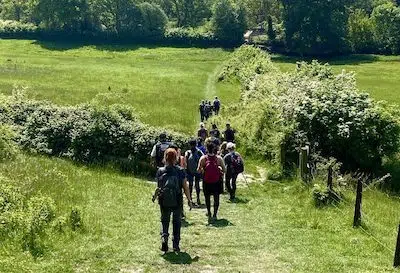
It takes much more than just passion and cosy walking boots to complete three strenuous mountain ascents in a constrained amount of time. Long-distance walking, steep climbs, shifting terrain, exhaustion, and the need to sustain focus for a prolonged amount of time are all included. Gaining the necessary skills in advance may make the 3 Peaks Challenge UK safer, easier to handle, and ultimately more satisfying for anybody getting ready.
Developing Robust Walking Endurance
One of the most crucial pillars of any multi-mountainous adventure is endurance. A walker could feel at ease after a short stroll, but the body must work for a lot longer to complete repeated hills.
Longer walking sessions should be introduced gradually throughout training rather than trying excessive distances all at once. The body may also become used to exercising when already exhausted by training back-to-back days. This gradually builds strength in the legs, hips, and core as well as cardiovascular endurance.
During certain training sessions, carrying a heavy rucksack while walking might help with preparation. The objective is to learn how to carry necessary equipment comfortably without letting the additional weight interfere with movement or posture.
Developing Pace Control
During endurance tests, it’s customary to start off moving too rapidly. Walkers may begin at a speed that seems comfortable at first but becomes challenging to sustain later due to excitement.
Therefore, it is crucial to learn how to walk at a steady, sustainable speed. Walkers should work on keeping a steady beat on both ascents and descents throughout training. Pacing abilities are especially important while climbing Ben Nevis as part of a strenuous multi-peak challenge.
Walkers can eat, drink, and modify their equipment without undue pressure when their speed is regulated.
Gaining Self-Assured Footwork
Different demands on balance and coordination may be made by mountainous terrain. Simple walking might become more difficult due to loose surfaces, uneven terrain, steep slopes, and damp weather.
Frequent training on a variety of terrain promotes the development of assured foot placement. Instead of focusing just on the ground immediately under their feet, walkers should learn to look ahead and choose steady steps.
Descending requires special consideration. Repeatedly walking downhill may put a lot of pressure on the knees and surrounding muscles. Reducing needless impact and enhancing balance are two benefits of practising controlled descents.
Comprehending Basic Navigation
Even while strolling in a structured group, navigation is a crucial outdoor ability. Understanding basic route awareness is beneficial to all participants.
Walkers should be able to read maps, identify topographical features, comprehend directions, and stick to a specified path. Instead of relying only on one gadget, they should learn how to use navigation tools appropriately.
It might be challenging to evaluate familiar-looking scenery due to bad weather or low visibility. Walkers who have a rudimentary understanding of navigation are more aware of their surroundings and are better able to comprehend judgements made throughout the task.
Controlling Hydration And Energy
Regular fuelling is necessary for extended durations of physical exertion. It may be more difficult to sustain performance if you wait until fatigue or extreme hunger manifests.
Finding meals that are comfortable and easy to consume while exercising is made possible by training walks. Regularly consuming small quantities of food might be more manageable than depending only on huge meals.
Similar preparation is needed for hydration. Walkers must balance the quantity of water they carry when climbing Scafell Pike or any other strenuous mountain ascent. It may be simpler to adhere to a basic food and drinking schedule during the real challenge if it is practised throughout training.
Getting Ready For Changing Circumstances
Walkers must learn to adjust their gear and attire since mountain conditions may change rapidly. Because it makes it possible to add or remove garments based on activity level and temperature, layering is very helpful.
Walkers may learn how their equipment works by practising under various conditions. Before the challenge day, it is important to test waterproof apparel, footwear, bags, walking poles, and headlights.
Time wastage is also avoided by becoming acquainted with the equipment. Knowing the precise location of necessary objects ensures that they may be promptly accessed when required.
Getting Ready To Be A Full Walker
A mix of fitness, practical outdoor knowledge, pace, navigation, equipment awareness, and mental toughness must be developed for effective preparation. It is impossible to develop these skills in a single training session.
Walkers may better prepare for the practical and physical difficulties that lie ahead by progressively honing each ability before the challenge. The best preparation involves more than just speeding up. The goal is to become a more competent, effective, and self-assured mountain hiker.


